A Treasure Text Revealed by Tulku Karma Lingpa
I prostrate to the Guru, the Yidam and the Ḍākinī.
I, the lowly woman Yeshe Tsogyal, made a great outer, inner and secret maṇḍala offering and humbly asked:
“O, Master Lotus Born, the work you have done for the welfare of all sentient beings here in Tibet, in this and in future lives, is vast. No one of such extreme kindness has ever come before, nor shall any come again. The practices you have given us are like essential nectar; though I am a lowly woman, of this I have no doubt. However, sentient beings in the future will have profuse thoughts and tremendous aggression; they will have wrong views towards the Holy Dharma, and in particular they will blaspheme the supreme teachings of the Secret Mantra. At that time, plague, famine and war will be widespread amongst sentient beings, and in particular, China, Tibet and Mongolia will be destroyed like ants’ nests, and a time of terrible suffering will befall the Tibetans.
“You have spoken of many ways to remedy these afflictions, but beings in the future will have no time to practice. Those who do have a slight inclination towards practice will be beset by powerful obstacles. Beings will not get along with one other; supplies and materials will be insufficient. Such terrible times as these will be extremely difficult to avert. In such times, Guru, what are the benefits of relying solely upon the practice of the Vajra Guru mantra? For the benefit of people of weak intellect in the future, I humbly entreat you to tell us.”
The Master Lotus Born spoke thus:
“O, Lady of Faith, what you say is absolutely true. In such future times, that practice will definitely be of short and long term benefit for sentient beings. Although I have concealed many earth treasures, water treasures, rock treasures, sky treasures and so on which contain unfathomable pith instructions and methods of practice, in the degenerate times it will be terribly difficult for fortunate beings to find the conditions and circumstances to meet with the teachings; this is a sign that beings’ merit is running out.
“However, in such times as those, this essential Vajra Guru mantra—if recited with vast bodhicitta aspiration in great sacred places, in monasteries, on the peaks of high mountains and the shores of vast rivers, in places inhabited by gods, demons and evil spirits, at the heads of valleys, geophysical junctions and so on—by ngakpas with unbroken samaya, vow-holding monastics, faithful men, women of fine qualities, and the like, however many times—one hundred, one thousand, ten thousand, one hundred thousand, ten million, one hundred million, etc.—will bring inconceivable benefits and powers. Countries everywhere will be protected from all plague, famine, warfare, armed violence, poor harvests, bad omens and evil spells. Rain will fall on time, harvests and livestock will be excellent, and lands will prosper. In this life, future lives, and on the pathways of the bardo, fortunate practitioners will meet me again and again—at best in actuality, or else in visions, and at the very least in dreams. Having gradually perfected the levels and paths, there is no doubt that they will join the ranks of male and female Awareness Holders in Ngayab Ling.
“Even one hundred recitations per day without interruption will make you attractive to others, and food, wealth and enjoyments will appear effortlessly. If you recite the mantra one thousand, ten thousand, or more times per day, you will bring others under your influence with your brilliance, and blessings and powers will be continuously and unobstructedly obtained. If you perform one hundred thousand, ten million or more recitations, the three worlds will come under your power, the three levels of existence will fall under your glorious sway, gods and spirits will be at your bidding, the four modes of enlightened activity will be accomplished without hindrance, and you will be able to bring immeasurable benefit to all sentient beings in whatever ways are needed. If you can do thirty million, seventy million or more recitations, you will never be separate from the Buddhas of the three times nor ever apart from me; thus, the eight classes of gods and spirits will obey your orders, praise your words, and accomplish whatever tasks you entrust to them.
“At best, practitioners will attain the rainbow body; failing that, at the time of death, mother and child luminosities will meet; and at the very least, they will see me in the bardo and all their perceptions having been liberated into their essential nature, they will be reborn in Ngayab Ling and accomplish immeasurable benefit for sentient beings.”
“Great Master, thank you for telling us about such infinite benefits and powers. You have been immensely kind. Although the explanation of the benefits and powers of the syllables of Guru Padma’s mantra is unfathomable, for the sake of sentient beings in the future, I humbly ask you to give us a brief description,” she asked.
Then the Great Master spoke thus:
“O, Noble Daughter, the Vajra Guru mantra is not only my essential mantra, it is the life-essence of the deities of the four classes of tantra, the nine vehicles, the 84,000 aspects of the Dharma, and so on. The heart essence of all the Buddhas of the three times, the lamas, deities, ḍākinīs, Dharma protectors, and the like is encompassed by this mantra. The reason for this is as follows. Listen well and hold this in your heart. Recite the mantra. Write it. Tell it to sentient beings in the future.
OṂ ĀḤ HŪṂ VAJRA GURU PADMA SIDDHI HŪṂ
OṂ ĀḤ HŪṂ is the supreme essence of enlightened body, speech and mind.
VAJRA is the supreme essence of the Vajra Family.
GURU is the supreme essence of the Ratna Family.
PADMA is the supreme essence of the Padma Family.
SIDDHI is the supreme essence of the Karma Family.
HŪṂ is the supreme essence of the Buddha Family.
OṂ ĀḤ HŪṂ VAJRA GURU PADMA SIDDHI HŪṂ
OṂ is the complete Sambhogakāya of the Five Buddha Families.
ĀḤ is the complete unchanging Dharmakāya.
HŪṂ is the complete Nirmāṇakāya—Guru Rinpoche.
VAJRA is the complete assembly of Heruka deities.
GURU is the complete assembly of Lama Awareness Holder deities.
PADMA is the complete assembly of Ḍākinīs and powerful female deities.
SIDDHI is the heart of all the wealth deities and protectors of hidden treasures.
HŪṂ is the heart of each and every Dharma protector.
OṂ ĀḤ HŪṂ VAJRA GURU PADMA SIDDHI HŪṂ
OṂ ĀḤ HŪṂ is the heart of the three classes of tantra.
VAJRA is the heart of the Vinaya and Sūtra.
GURU is the heart of the Abhidharma and the Kriyā Yoga.
PADMA is the heart of the Upā and Yoga Tantras.
SIDDHI is the heart of the Mahā and Anu Yogas.
HŪṂ is the heart of the Dzogchen Ati Yoga.
OṂ ĀḤ HŪṂ VAJRA GURU PADMA SIDDHI HŪṂ
OṂ ĀḤ HŪṂ purifies obscurations of the three mental poisons.
VAJRA purifies obscurations of hatred and aversion.
GURU purifies obscurations of pride.
PADMA purifies obscurations of craving and attachment.
SIDDHI purifies obscurations of jealousy.
HŪṂ purifies obscurations of delusion and disturbing emotions.
OṂ ĀḤ HŪṂ VAJRA GURU PADMA SIDDHI HŪṂ
OṂ ĀḤ HŪṂ grants the attainment of the three kāyas.
VAJRA grants the attainment of mirror-like wisdom.
GURU grants the attainment of the wisdom of equanimity.
PADMA grants the attainment of the wisdom of discernment.
SIDDHI grants the attainment of all-accomplishing wisdom.
HŪṂ grants the attainment of all that stems from primordial wisdom.
OṂ ĀḤ HŪṂ VAJRA GURU PADMA SIDDHI HŪṂ
OṂ ĀḤ HŪṂ subdues gods, spirits, and human beings.
VAJRA conquers the gandharvas and fire spirits.
GURU conquers the lord of death and demonic spirits.
PADMA conquers the harmful water gods and spirits who reign over the mind.
SIDDHI conquers the powerful demons who haunt mountain ranges and passes.
HŪṂ conquers the planetary demons and gods of localities.
OṂ ĀḤ HŪṂ VAJRA GURU PADMA SIDDHI HŪṂ
By OṂ ĀḤ HŪṂ, the six transcendent perfections are accomplished.
By VAJRA, all peaceful activities are accomplished.
By GURU, all enriching activities are accomplished.
By PADMA, all magnetizing activities are accomplished.
By SIDDHI, all enlightened activities are accomplished.
By HŪṂ, all wrathful activities are accomplished.
OṂ ĀḤ HŪṂ VAJRA GURU PADMA SIDDHI HŪṂ
OṂ ĀḤ HŪṂ averts the dagger sorcery of Buddhists and Bönpos.
VAJRA averts the harmful powers of the wisdom deities.
GURU averts the harmful powers of the eight classes of gods and demons.
PADMA averts the harmful powers of the worldly gods and spirits.
SIDDHI averts the harmful powers of nāgas and gods of localities.
HŪṂ averts the harmful powers of all three: gods, demons and human beings.
OṂ ĀḤ HŪṂ VAJRA GURU PADMA SIDDHI HŪṂ
OṂ ĀḤ HŪṂ crushes the forces of the five poisons.
VAJRA crushes the forces of hatred and aversion.
GURU crushes the forces of pride.
PADMA crushes the forces of craving and attachment.
SIDDHI crushes the forces of jealousy.
HŪṂ crushes the forces of gods, demons and humans.
OṂ ĀḤ HŪṂ VAJRA GURU PADMA SIDDHI HŪṂ
By OṂ ĀḤ HŪṂ, the accomplishments of enlightened body, speech and mind are attained.
By VAJRA, the accomplishments of the peaceful and wrathful deities are attained.
By GURU, the accomplishments of the Awareness-Holder Lamas are attained.
By PADMA, the accomplishments of the ḍākinīs and Dharma protectors are attained.
By SIDDHI, the supreme and common accomplishments are attained.
By HŪṂ, whatever accomplishment you wish for is attained.
OṂ ĀḤ HŪṂ VAJRA GURU PADMA SIDDHI HŪṂ
OṂ ĀḤ HŪṂ transfers one to the primordial pure realm.
VAJRA transfers one to the Eastern Buddhafield of Manifest Joy.
GURU transfers one to the Southern Buddhafield of Glory.
PADMA transfers one to the Western Buddhafield of Bliss.
SIDDHI transfers one to the Northern Buddhafield of All-Accomplishing Action.
HŪṂ transfers one to the Central Buddhafield of Immutability.
OṂ ĀḤ HŪṂ VAJRA GURU PADMA SIDDHI HŪṂ
By OṂ ĀḤ HŪṂ, the level of the Three-Kāyas Awareness Holder is attained.
By VAJRA, the level of Level-Dwelling Awareness Holder is attained.
By GURU, the level of Immortal-Life Awareness Holder is attained.
By PADMA, the level of the Great-Seal Awareness Holder is attained.
By SIDDHI, the level of the Spontaneous-Presence Awareness Holder is attained.
By HŪṂ, the level of Fully-Ripened Awareness Holder is attained.
OṂ ĀḤ HŪṂ VAJRA GURU PADMA SIDDHI HŪṂ
One recitation of the Vajra Guru mantra will grant a physical body and entry into this world. Any sentient being who sees, hears, or thinks of the mantra will definitely be established among the ranks of the male and female Awareness Holders. The infallible Vajra Guru mantra is the word of truth; if what you wish for does not happen as I have promised, I, Padma, have deceived sentient beings—absurd! I have not deceived you—it will happen just as I’ve promised.
If you are unable to recite the mantra, use it to adorn the tops of victory banners and prayer flags; there is no doubt that sentient beings touched by the same wind will be liberated. Otherwise, carve it on hillsides, trees, and stones; after they are consecrated, anyone who merely passes by and sees them will be purified of illness, spirit possession, and obscurations. Spirits and demons dwelling in the area will offer wealth and riches. Write it in gold on pieces of indigo paper and hang them up; demons, obstacle-makers, and evil spirits will be unable to harm you. If you place the mantra upon a corpse immediately upon death and do not remove it, during cremation rainbow colors will flash out and the consciousness will definitely be transferred to the Blissful Realm of Amitābha. The benefits of writing, reading and reciting the Vajra Guru mantra are immeasurable. For the benefit of sentient beings in the future, write this down and conceal it. May it meet with those of fortune and merit. Samaya Gya Gya Gya
From those with wrong views, this is sealed to secrecy. Gya Gya Gya
It is entrusted to those with pure samaya. Gya Gya Gya
Tulku Karma Lingpa brought forth this treasure and copied it down from a golden scroll.
| Translated by Heidi Nevin in Darjeeling, India on August 9, 2002.
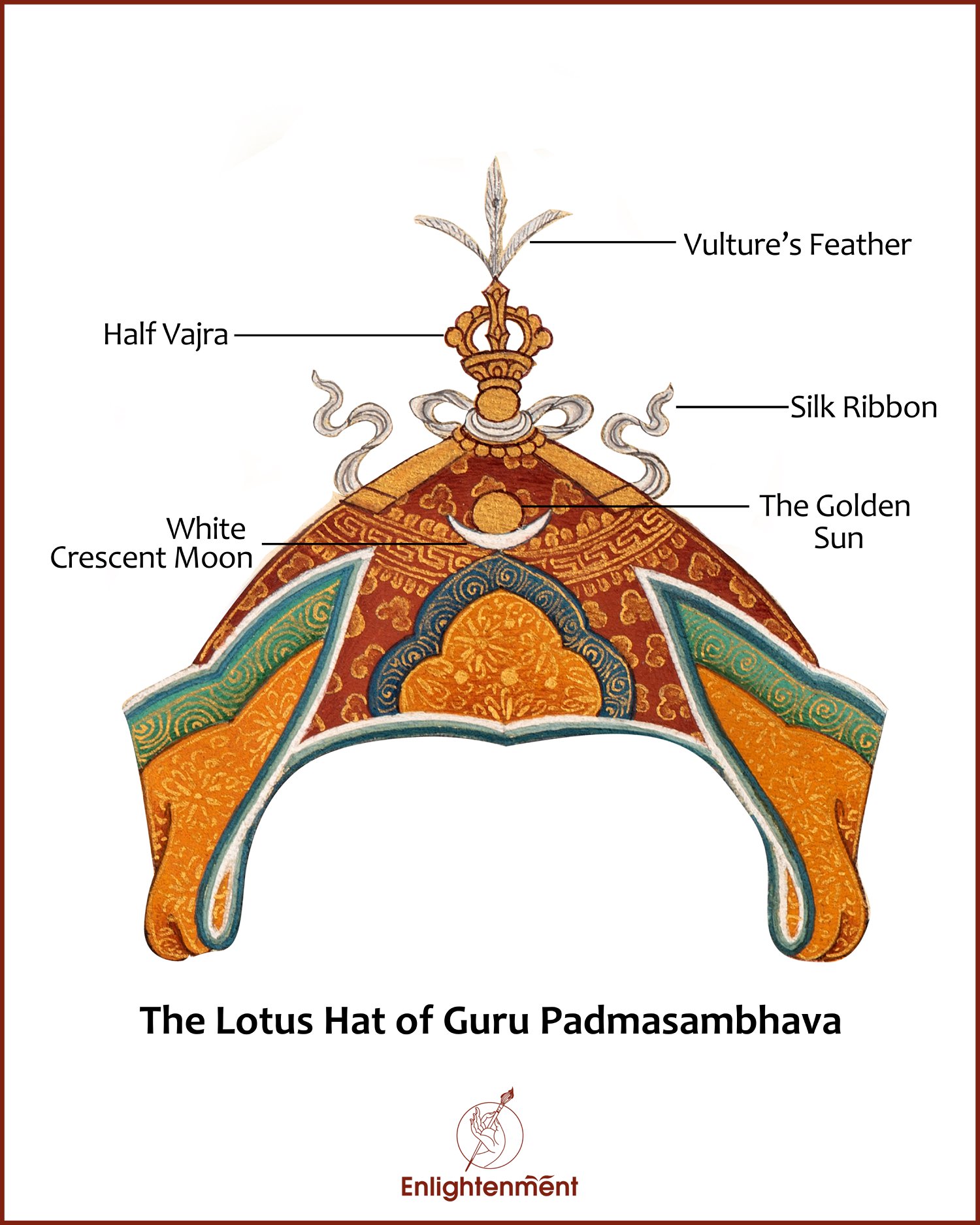
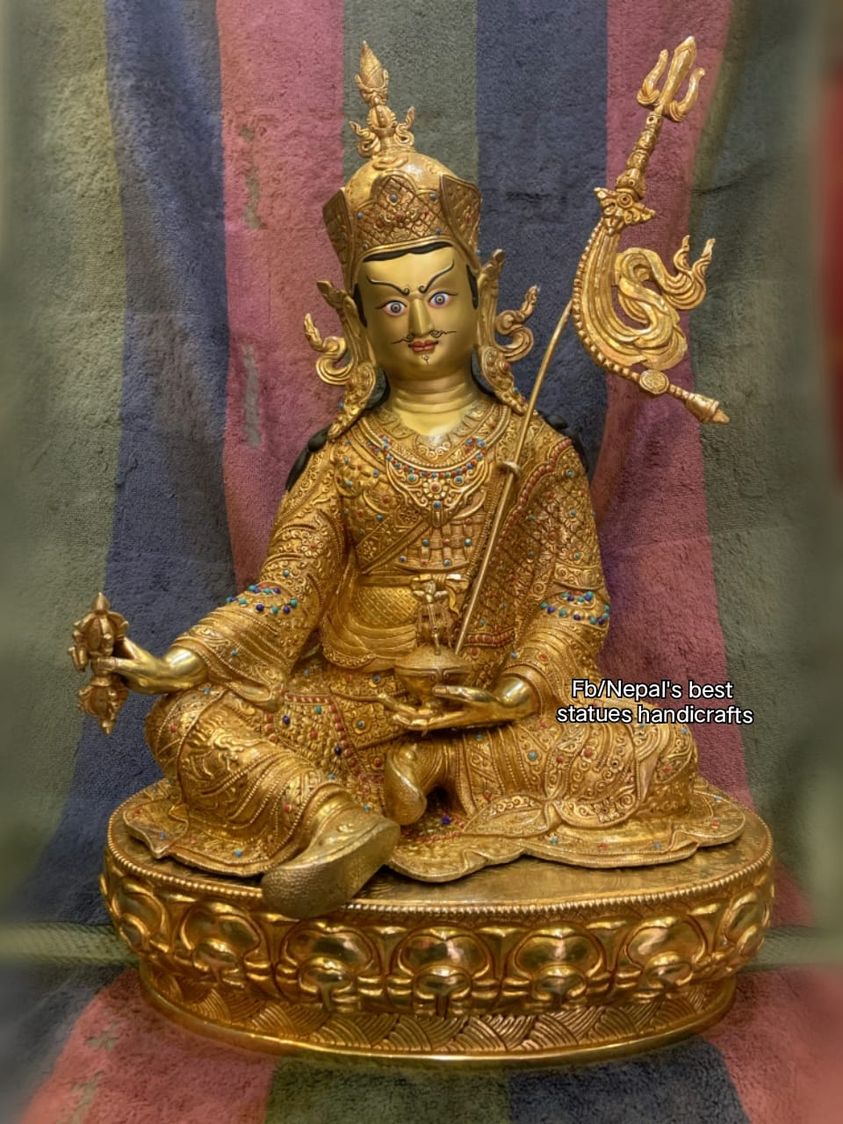
The Life of Guru Rinpoche, Padmasambhava
Also known as Guru Rinpoche is not only a fully enlightened Buddha, but he has also manifested as one of the greatest sages of the Vajrayana Buddhism. He was born miraculously to serve infinite sentient beings through the power of his wisdom and compassion. He manifested in Zangdok Palri Pure Land and remains there as the body of light. Twelve years after the Mahaparinirvana of the Buddha, the rays of blessing light of the Buddha of Infinite Light touched a lotus in the Milk Ocean in the Southwest direction from Bodhagaya. As a result, Guru Rinpoche was born miraculously via lotus-birth without human parents.
Indrabodhi, the King of Oddiyana, and his Ministers found the child while sailing across the ocean. They brought him to the Palace and enthroned him as the Crown Prince. The young Padmasambhava was trained and skilled in all the arts of knowledge. But before long he took leave of the royal Palace in order to serve sentient beings through the path of esoteric teachings and sacred power. Guru Rinpoche was a fully enlightened Buddha, but to emphasize the importance of following the Dharma , he himself received various transmissions from both human knowledge-holders and non-human deities, and Dakini. He gave those teachings to infinite visible and invisible beings and through his invincible power, pacified many negative forces obstructing his enlightening activities. On one of the miraculous event of his life, he transformation of a huge fire (which was intent to burn him) into the Rewalsar lake. Thus, flourishing Dharma into the Kingdom of Zahor. Padmasambhave then, with his consort Princess Mandarava, of Zahor meditated in Maratika Cave in Nepal and attained immortality.
Through the meditations on Dzogpa Chenpo, he transformed his mortal body into “the rainbow-light-body of great transference". At the beginning of the 9th century, Guru Rinpoche visited Tibet at the invitation of King Trisong Deutsen Monastery, introducing Buddhism to Tibet for the very first time. His visited Tibet along with other Himalayan regions and accomplished three major goals:
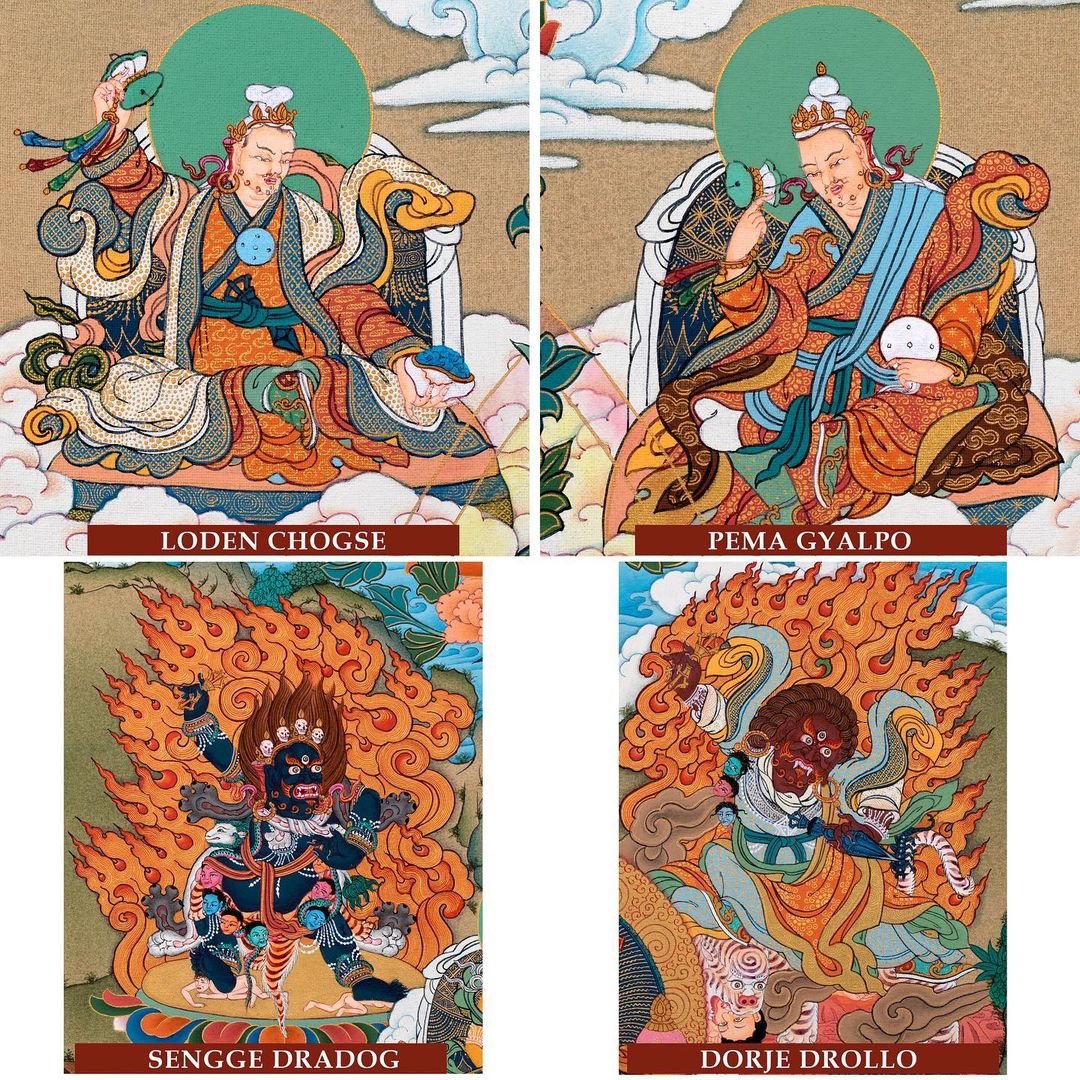
Firstly, Guru Rinpoche tamed both human and non-human beings who were obstructing the building of the Samye Monastery and the establishment of Buddhism in Tibet. On the top of Hepo Mountain near Samye Monastery, he defeated the spirit forces, bounding them to vow as the protector of Dharma and the Dharma followers. Also, in the cave of Taktsang in Bhutan, he manifested himself in the form of Dorje Drolö, a wrathful form of Guru Rinpoche, and subdued the negative spirit forces.
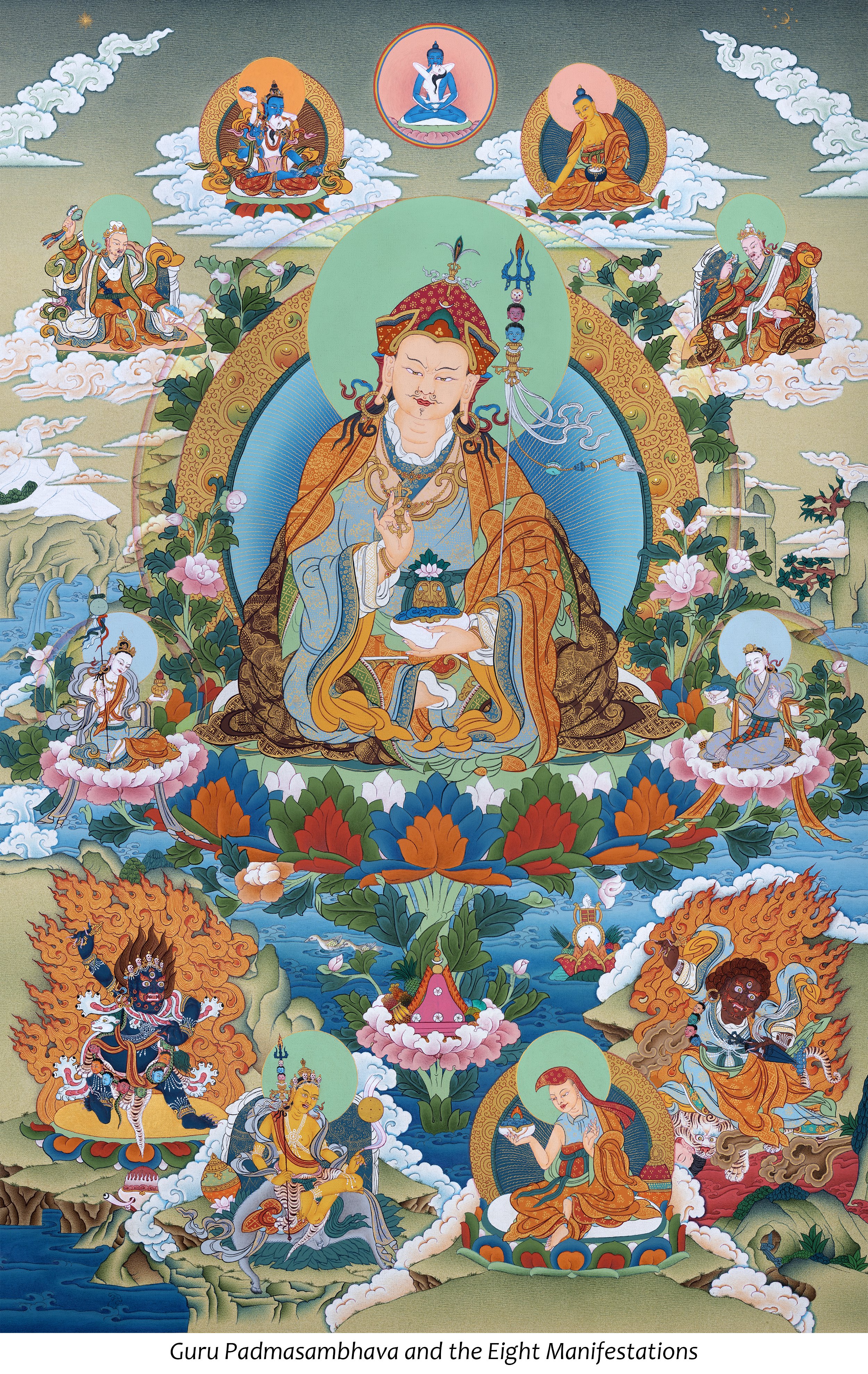
guru padmasambhava and eight manifestations
Next, he taught hundreds of different teachings and the wisdom of Vajrayana to many of his accomplished disciples. The unbroken lineages of those transmissions have been maintained by highly enlightened adepts for centuries and are flourishing to this day. In today's world, these lineages are widely spread to many corners of the world.
He traveled to every valley of Tibet as well as Nepal, Bhutan, and Sikkim and blessed them as the Sacred lands. More amazingly, transmitting those esoteric wisdoms and teachings to his disciples, he miraculously concealed them in the pure nature of their minds. Then he also concealed numerous symbolic scripts or texts and religious objects in different places such as rocks, statues, lakes, and space. Those concealed teachings are known as his famous Ter, "Hidden Treasure Teachings"
Starting from the eleventh century till today, thousands of tertons- whom he has concealed the teachings-have miraculously been discovering thousands of volumes of ter teachings and ter objects from the rocks, earth, lakes, sky, etc. These discovered teachings and objects are called "the earth ter." Then, many of those tertons discovered the concealed teachings and wisdoms from the nature of their own minds through the power of the rebirths of Guru Rinpoche's direct disciples in their memory. These discovered teachings are called "the mind Ter."
His teachings are not only practiced in Tibet, but in many places around the World. Guru Rinpoche also blessed many valleys such as Sikkim, Khenpa Lung and Pemakö as "Hidden Lands."
"In the dark ages, people blame the decadence of the time as the culprit of their sufferings, but the sufferings are actually caused by their own misdeeds. Nevertheless when the devotees are facing danger, the safe places for them to escape to are the hidden lands."
One of the most famous body imprints of Guru Rinpoche is in Kurjey in Bumthang, Bhutan.
After staying in Tibet for about fifty-five years, Guru Rinpoche announced that he was leaving for the lands of the rakshas. On Gongthang pass in Western Tibet, he bade farewell to King Mutig Tsenpo and the assembled devotees of Tibet.
As Guru Padmasambhava looked up at the sky, suddenly appeared the dakinis and celestial beings with flowers, banners, and music in the midst of colorful beams of light with a beautiful blue horse adorned with ornaments. Riding the horse, Guru Rinpoche flew away through the sky before the eyes of all. He landed in Zangdok Palri, where he instantly emanated the Lotus Light Palace as a Manifested Pure Land. He still resides in Zangdok Palri, in the form of “rainbow-light-body of great transference” with an ocean of Enlightened Ones and the rebirths of many of his numerous devotees. Hence, he remains in the nature of Ultimate-body and the qualities of Enjoyment-body and the display of Manifested-bodies of Buddhahood.
"Every morning and every evening, I will come to serve you
By riding the rays of the rising and setting sun.
On the tenths of the waxing moons, I will come in person.
O my devout followers!
Arrange feast offerings in blazing vessels of precious gems
And sing the Seven Line Prayer in devotional melodies
With the sounds of music and skull damarus.
I, Orgyen (Guru Rinpoche) - from the Chamara subcontinent,
who, like a mother, cannot bear the cry of her beloved child,
will come to grant my blessings.
This is a promise!
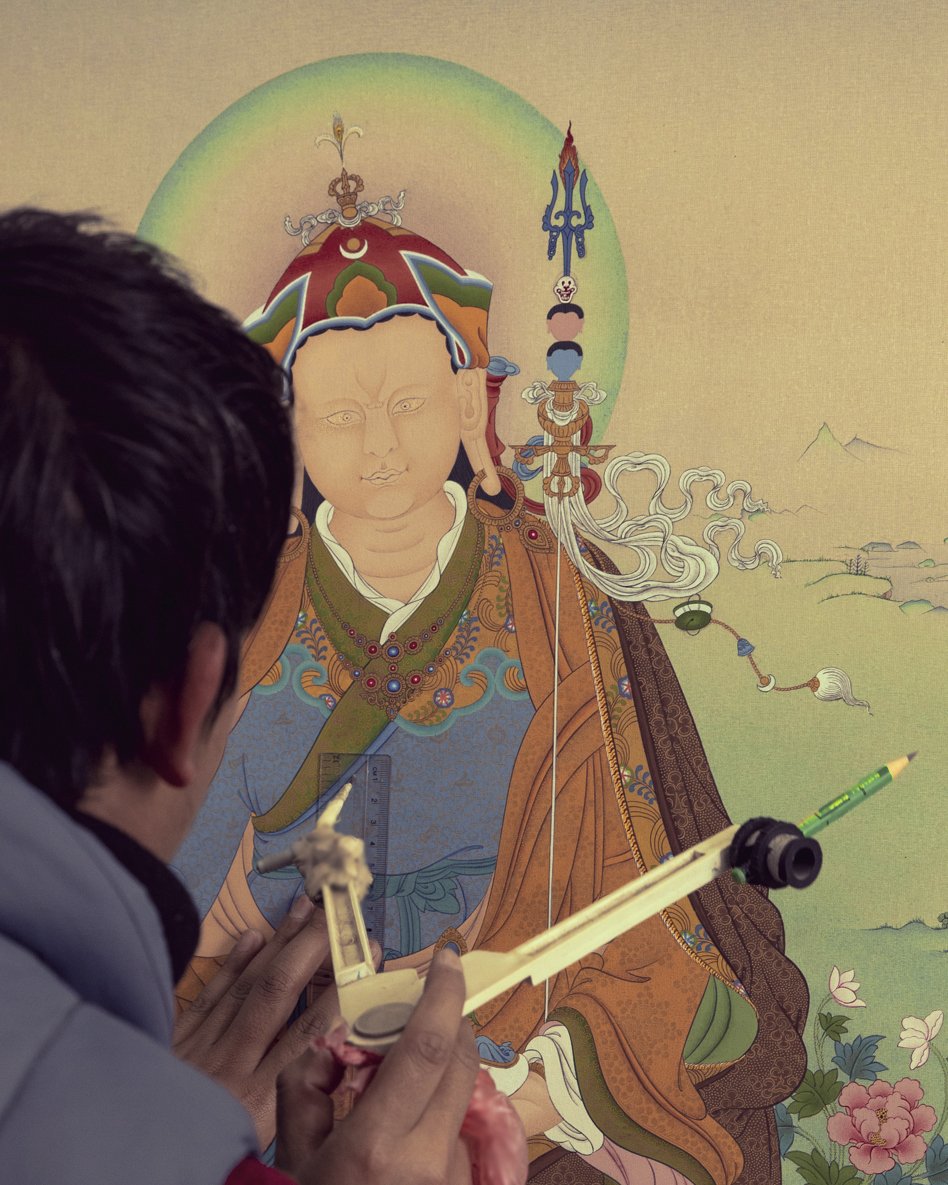
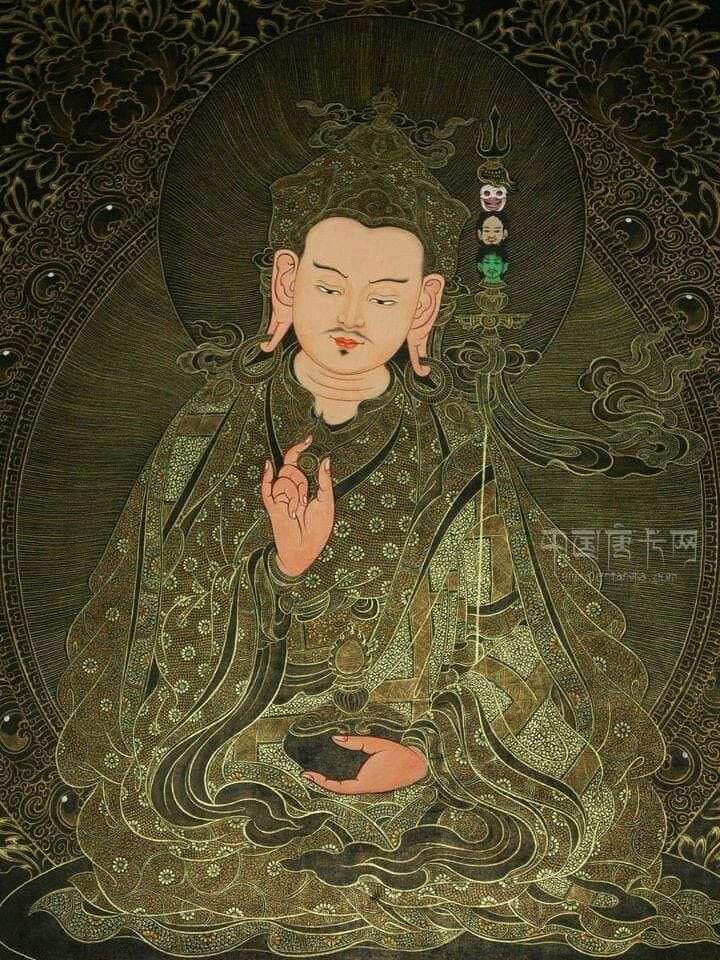
guru rinpoche thangka painting
Mudras are sacred hand gestures or positions that used to evoke a state of mind. The Sanskrit word “mudra” means “seal”, “mark”, or “gesture”. In Tibetan the word is ???????? or “chakgya”. Each of these sacred hand gestures has a specific meaning. Many of them symbolize major moments or events in the Buddha’s life.
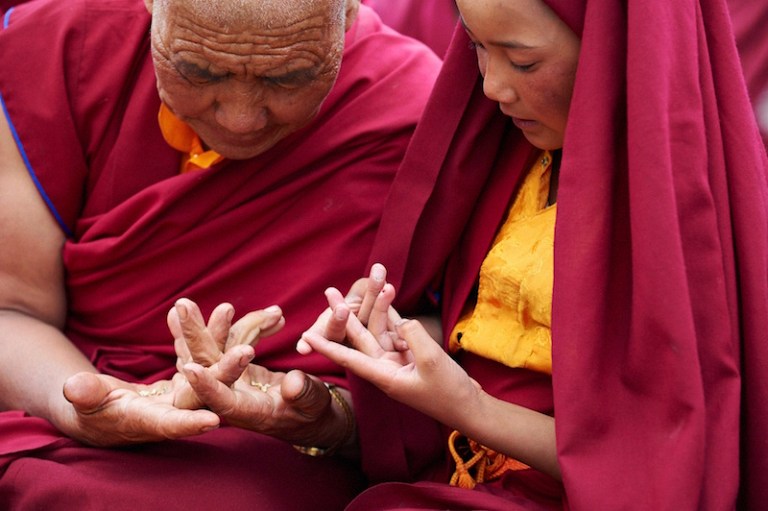
In this beautiful photo by Olivier Adam, an elderly nun in Zanskar shows a novice nun how to make the Mandala Offering Mudra.
8 Mudras and their Meaning
Sacred hand gestures or mudras are often depicted in Buddhist art. In this blog we’d like to share descriptions and images of some common mudras. The list here is not exhaustive.
The Earth Witness Mudra
When Siddhartha Gautama, the historical Buddha, was meditating under the Bodhi tree, he was assailed by the demon Mara, who tried to disturb his mind. Mara represents the passions that trap and delude us. Siddhartha refused to be tempted from the path to enlightenment and he called on the earth to witness his worthiness to become enlightened, saying, “The earth shall be my witness, I will not let myself be seduced.” In the Earth Witness Mudra, (also known as the Bhumisparsa Mudra or Gesture of Witness), the historical Buddha is seated in the meditation posture and touches the earth with the fingertips of his right hand, palm facing inwards. The left hand is placed in the lap with the palm facing upwards.
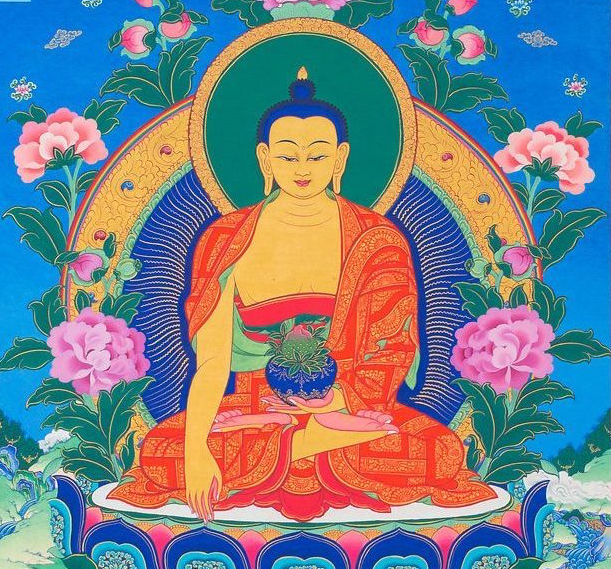
In this detail from a thangka print, the historical Buddha is depicted seated in meditation and calling the earth as his witness.
The Mudra of Meditation
The Mudra of Meditation (dhyana) is made by placing both hands on the lap, right hand on the left, with the palms facing upwards, the tips of the thumbs touching, and the fingers fully stretched. This mudra helps to calm the mind for meditation and is used for deep contemplation and reflection. The mudra of meditation is a characteristic gesture of the Buddha Shakyamuni.
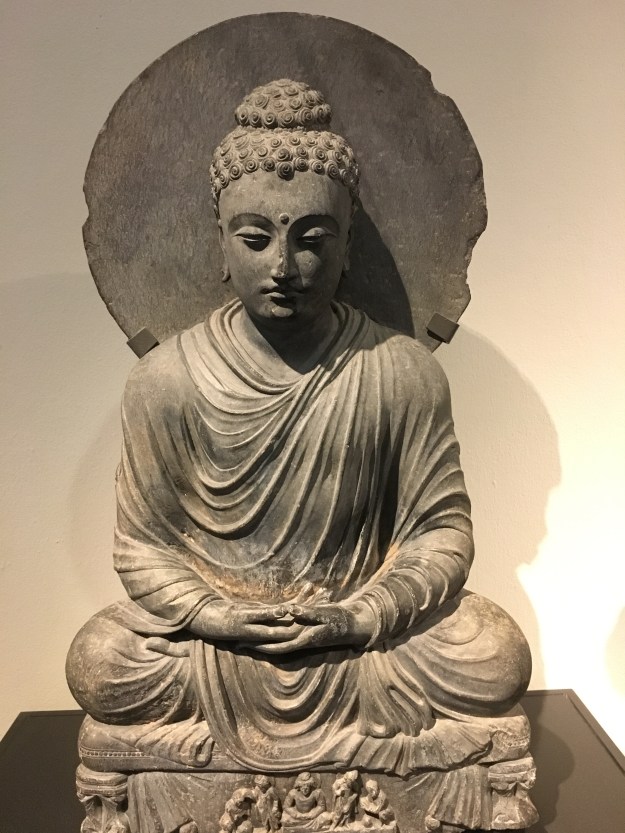
This ancient stone sculpture shows the Buddha with his hands in the Mudra of Meditation
The Namaskara or Anjali Mudra
This mudra, while not found in representations of the Buddha or other deities, is commonly used by nuns, monks, and lay people to symbolize devotion, prayer, and admiration. Called the Namaskara Mudra or the Anjali Mudra, it is used as a common form of greeting in most Asian countries. Anjali is a Sanskrit word which means “salutation” or “to offer” and Namaskar is Hindi for “good day”. To make this mudra, you bring your palms together in front of your heart space, fingers pointing upwards, and thumbs close to the chest, to symbolize honor, respect, and devotion.
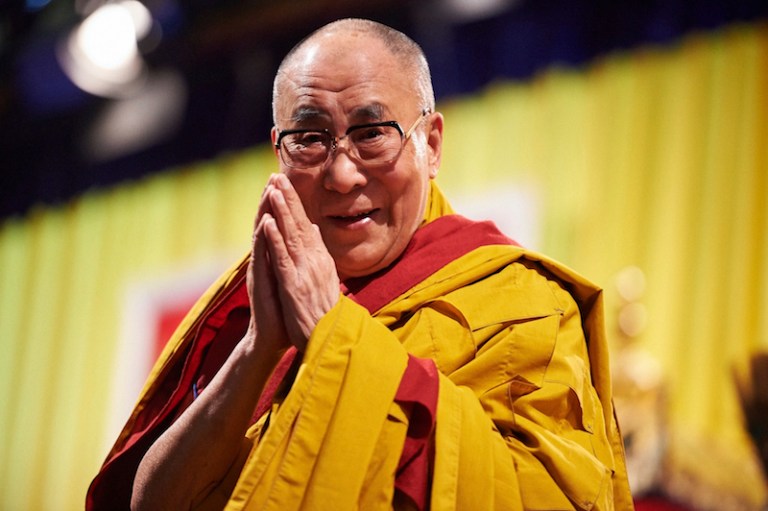
His Holiness the Dalai Lama holds his hands together in greeting and in offering respect to others. Photo courtesy of Olivier Adam.
Mudra of Holding the Jewel or Manidhara Mudra
The Mudra of Holding the Jewel looks very similar to the Namaskara Mudra or the Anjali Mudra shown above. Also called the Manidhara Mudra, it is made by holding one’s hands together in front but with the palms and fingers slightly arched, holding the precious, wish-fulfilling jewel. This jewel or gem is also depicted in Tibetan prayer flags, carried upon the back of the Lung Ta or wind horse. This sacred hand gesture of holding the jewel is a mudra of Avalokiteshvara, a bodhisattva who embodies the compassion of all Buddhas. The Tibetan word for Avalokiteshvara is Chenrezig (??????????????). The Dalai Lamas are believed to be manifestations of Chenrezig,
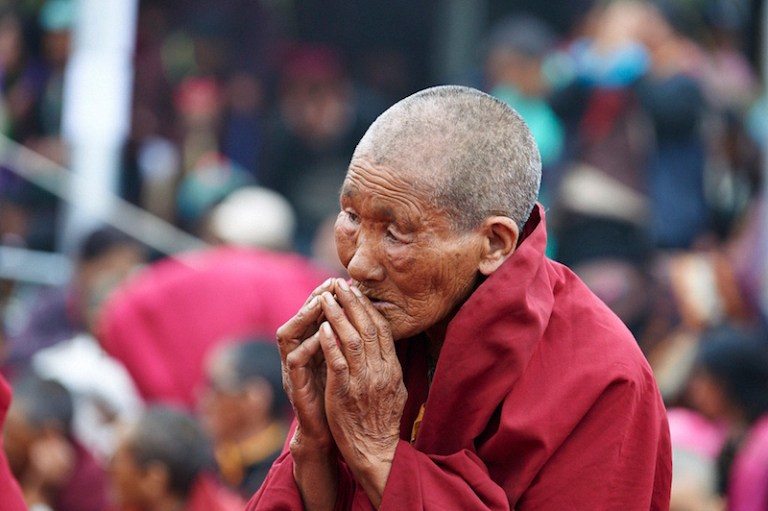
An elderly nun in Zanskar places her palms together in devotion, holding the wish-fulfilling jewel, a mudra associated with Avalokiteshvara (Tibetan: Chenrezig). Photo courtesy of Olivier Adam.
The Mandala Offering Mudra
The Mandala Offering Mudra is a complex and sacred hand gesture that acts as a symbolic offering of the entire universe for the benefit of all sentient beings. Performing the Mandala Offering Mudra helps to reduce one’s attachment and to purify the clinging mind. Although this mudra is usually made together with prayers and Buddhist chants, non-Buddhists can also perform it to receive its spiritual benefits.
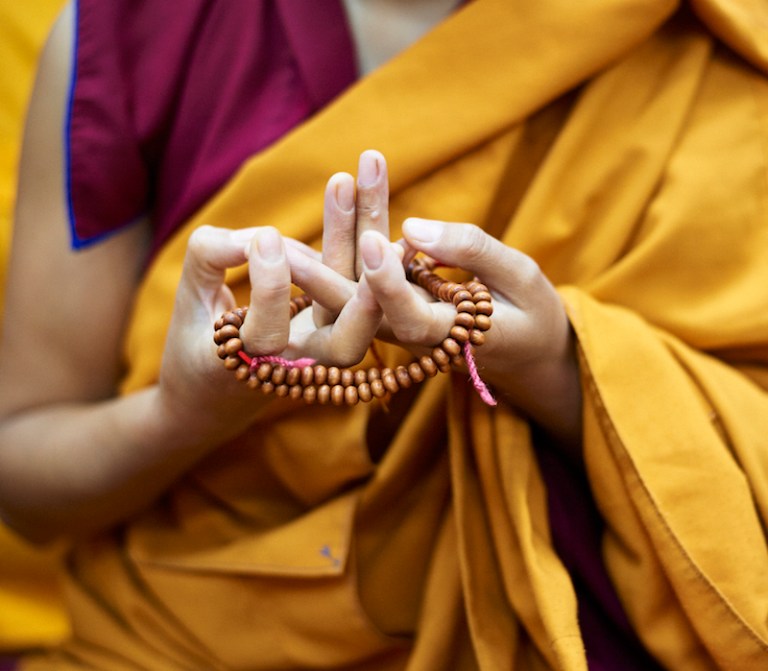
A Tibetan Buddhist nun performs the Mandala Mudra with her mala (Buddhist prayer beads). Photo courtesy of Olivier Adam.
To make this complex mudra, sit in meditation pose with your back straight. Calm your breathing and visualize offering the mandala – the universe – to the Buddha, bodhisattvas, and all holy beings, giving with great joy and with purity of heart. Place your hands palms up and intertwine your fingers. With the tips of your thumbs, press down on the tips of the opposite little finger. Then, with the bent tips of your index fingers, press down on the tip of the opposite middle finger. Finally, take your ring fingers, unclasp them, and put them back to back, pressing the backs together and with both fingers going straight up through the center. Together the ring fingers symbolize Mt. Meru, the sacred mountain, and the four continents described in Buddhist cosmology.
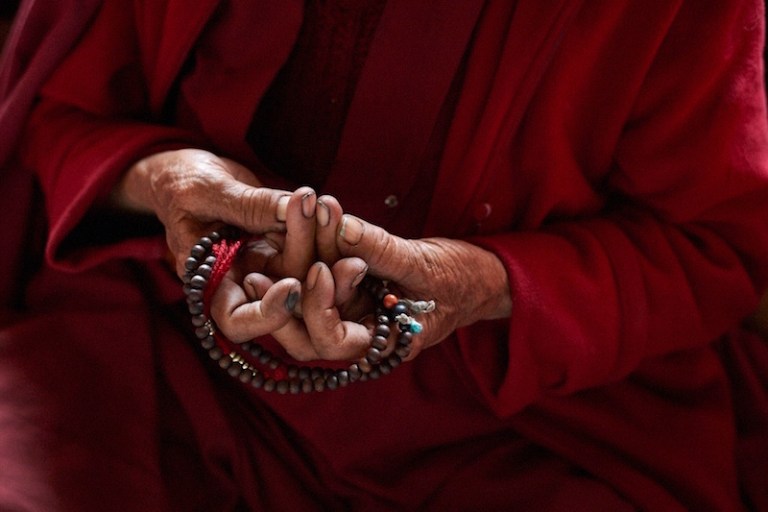
A Tibetan Buddhist nun in Zanskar performs the mandala offering mudra. Photo courtesy of Olivier Adam.
Vitarka Mudra or Teaching Mudra
The Vitarka Mudra (the Mudra of Teaching or Discussion) is a common mudra representing the discussion and transmission of Buddhist teachings. It is formed by joining the tips of the thumb and index finger together to form a circle, keeping the other three fingers pointing straight up. The circle formed by the joined fingers symbolizes perfection with no beginning or end.
This mudra is usually made with one hand, most often the right one, with the hand held upward close to the chest and the palm facing outward. However, the mudra may also be made with both hands held in front of the chest, with each index finger and thumb joined in a circle. When two hands are used, the left palm faces inward and the right palm is turned outward. The Teaching Mudra represents the Buddha’s first teaching after becoming enlightened. It also symbolizes the “Turning of the Wheel of the Dharma” or Dharmachakra. There are a great number of variations of this mudra in Mahayana Buddhism. In Tibetan Buddhism, it is the mystic gesture of Taras and bodhisattvas.
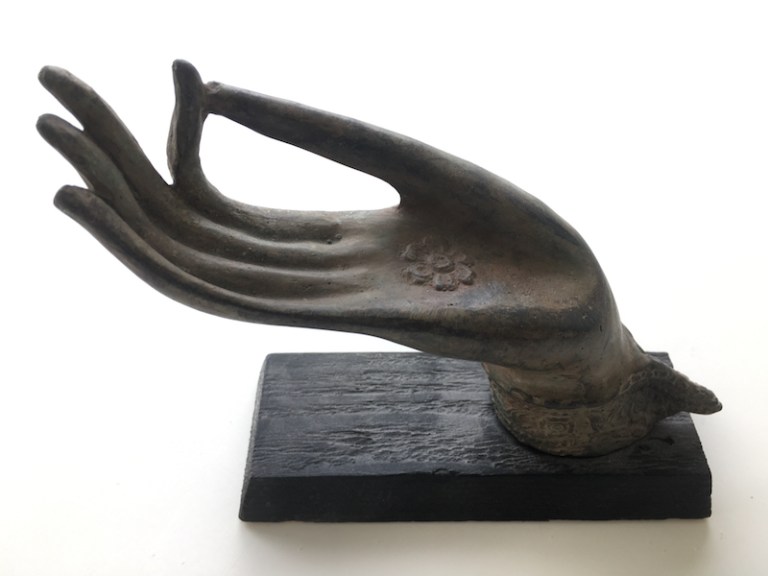
This sculpture shows the mudra of teaching or the Vitarka Mudra, with the tips of the thumb and index finger joined to form a circle.
 mudra9
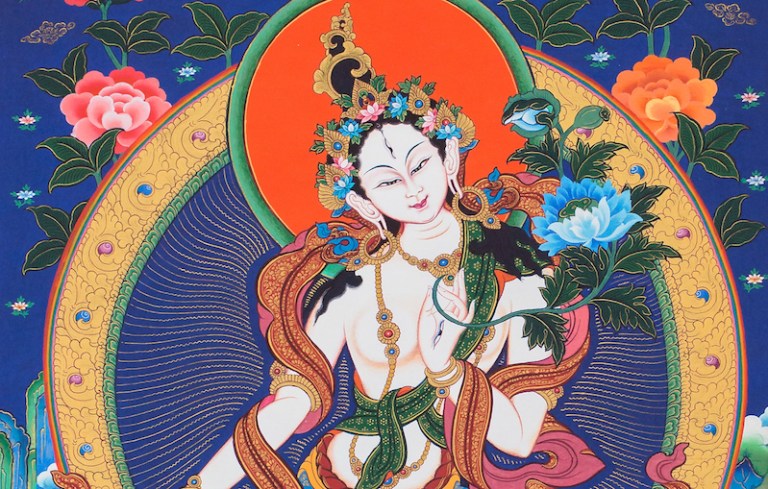
In this detail from a thangka print, White Tara is holding an utpala flower in her raised left hand. The tips of her thumb and fourth or ring finger are touching. This is a gesture of good fortune and shows that, by relying upon her, one may accomplish complete purity of mind and body.
Generosity Mudra or Varada Mudra
The Varada Mudra is the gesture of generosity, charity, and compassion. It is commonly found in representations of the Green and White Tara. This sacred hand gesture represents the granting of blessings, wishes, or even pardon. It also symbolizes the “gift of truth” – the precious gift of the dharma or Buddhist teachings. In the Varada Mudra, the palm faces out and hangs down, usually touching the right leg. This mudra is often used in conjunction with another mudra. The five fingers represent the five perfections: generosity, morality, patience, diligence, and meditation.
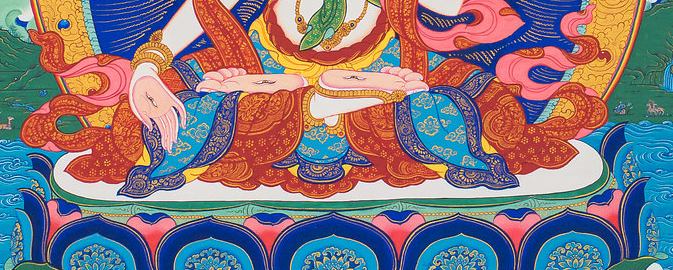
Detail of a thangka print depicting White Tara and showing the outward facing palm and downward hand of the Varada Mudra or Mudra of Generosity.
Mudra of Fearlessness or Abhaya Mudra
Abhaya in Sanskrit means fearlessness. The Mudra of Fearlessness or the Abhaya Mudra symbolizes the dispelling of fear. It can look to Westerners like the common hand gesture for “stop”. The mudra is made by raising the right hand to shoulder height, with the arm bent and the palm facing outward. This mudra is more commonly depicted in standing images.
This very ancient hand gesture is also a sign of peace and friendship. Placing one’s hand up and open in this way indicates that one is free of weapons and comes in peace. In Buddhism, the mudra shows the fearlessness and therefore the spiritual power of the Buddha or bodhisattva who makes it.
It is said that the historical Buddha made this sacred hand gesture immediately after gaining enlightenment. At a later time, the Buddha was about to be attacked by a mad elephant. The poor animal had been fed alcohol and tortured by one who hoped to use the elephant as a weapon against the Buddha. The elephant, enraged and in pain, charged at the Buddha and his followers. While others ran away, the Buddha stood calmly, raising his hand in the gesture of fearlessness. He felt great love and compassion for the stricken elephant. In response, the elephant stopped in its charge, became calm, and then approached the Buddha and bowed its head.
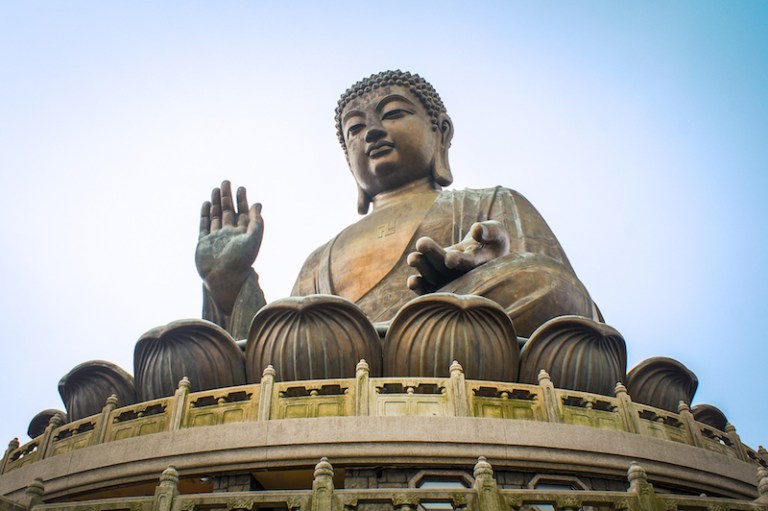
A giant Buddha statue in Hong Kong shows the seated Buddha with the mudra of fearlessness or the Abhaya Mudra
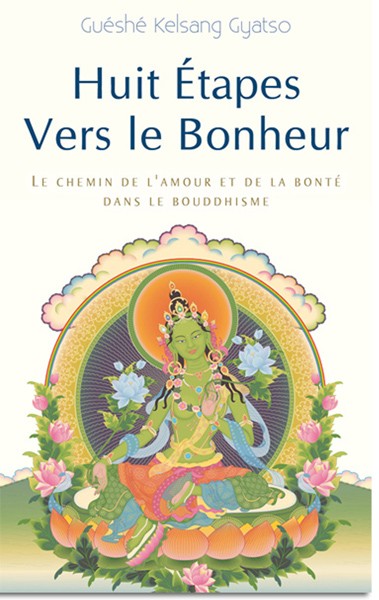
1. Considérant tous les êtres
Comme plus précieux qu'un joyau qui exauce tous les souhaits
Pour accomplir le but ultime
Je ne cesserai de les chérir.
2. Chaque fois que je me trouve en compagnie,
Je me verrai comme le plus humble de tous,
Et tenant les autres pour suprêmes,
Je les chérirai du plus profond de mon cœur.
3. Dans tous les actes, j'observerai mon esprit
Et, dès que surgissent les émotions destructrices,
Je leur ferai face et les écarterai avec fermeté
Car elles sont néfastes pour moi-même et pour autrui.
4. Quand je rencontre des personnes négatives
Ou accablées par le poids des méfaits et de la souffrance,
Je les tiendrai en grande estime,
Comme si je découvrais un trésor rare et inestimable.
5. Quand, par envie, une personne me fait du tort,
M'attaque ou me méprise,
Je prendrai sur moi toute défaite
Et leur offrirai toute victoire.
6. Même quand une personne que j'ai aidée,
Ou en laquelle j'ai placé de grands espoirs,
Me traite de façon très injuste,
Je la verrai comme un véritable maitre spirituel.
7. En bref, directement ou indirectement,
J'offrirai aide et bonheur à tous les êtres, mes mères,
Et en mon for intérieur, je prendrai sur moi
Tous leurs maux et toutes leurs souffrances.
8. J'apprendrai à préserver toutes ces pratiques
Des souillures des huit préoccupations mondaines.
Puissé-je reconnaître toutes choses comme illusoires
Et, brisant la chaîne de l'attachement, me libérer de la servitude!
par Guéshé Langri Thangpa
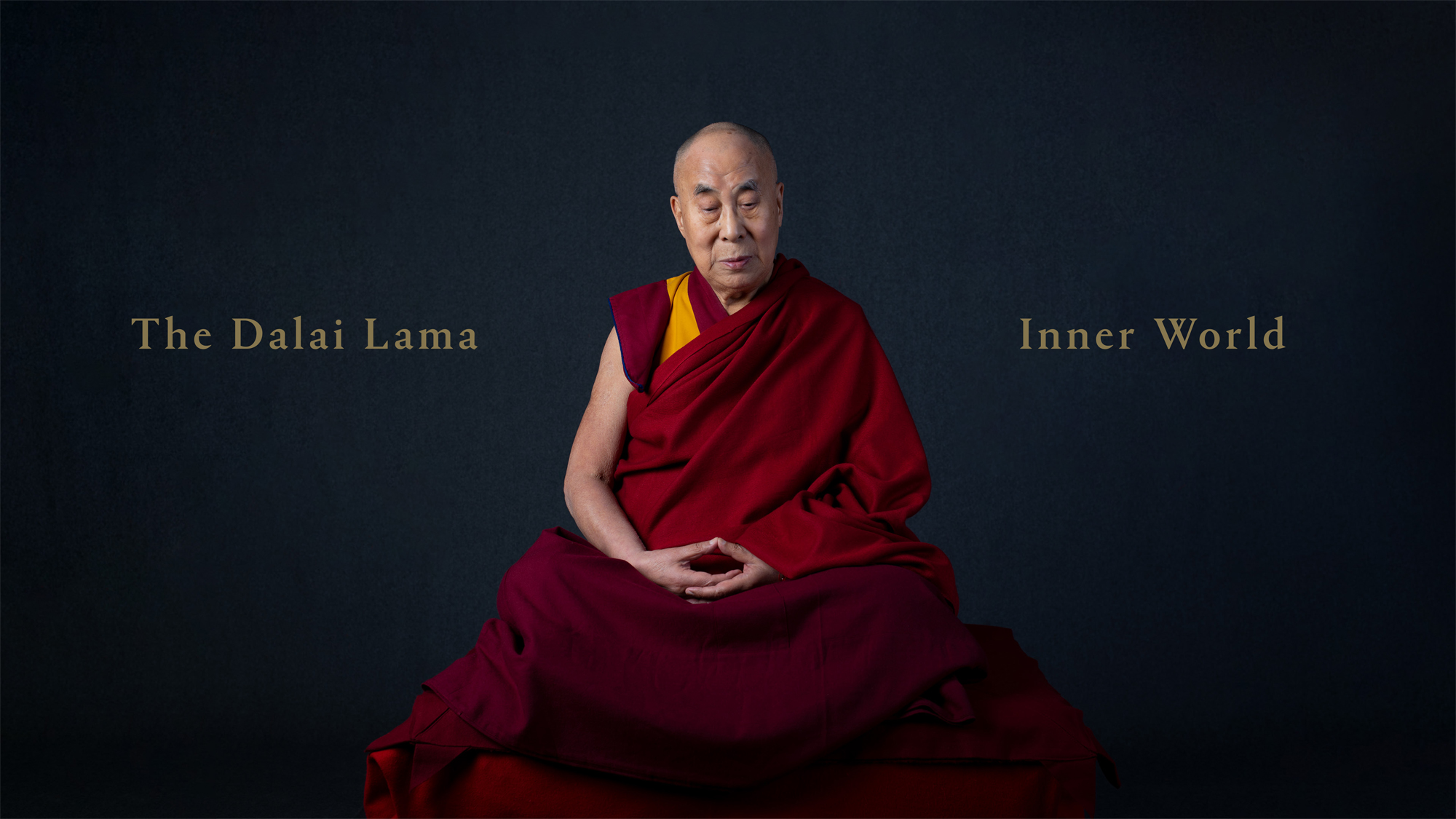
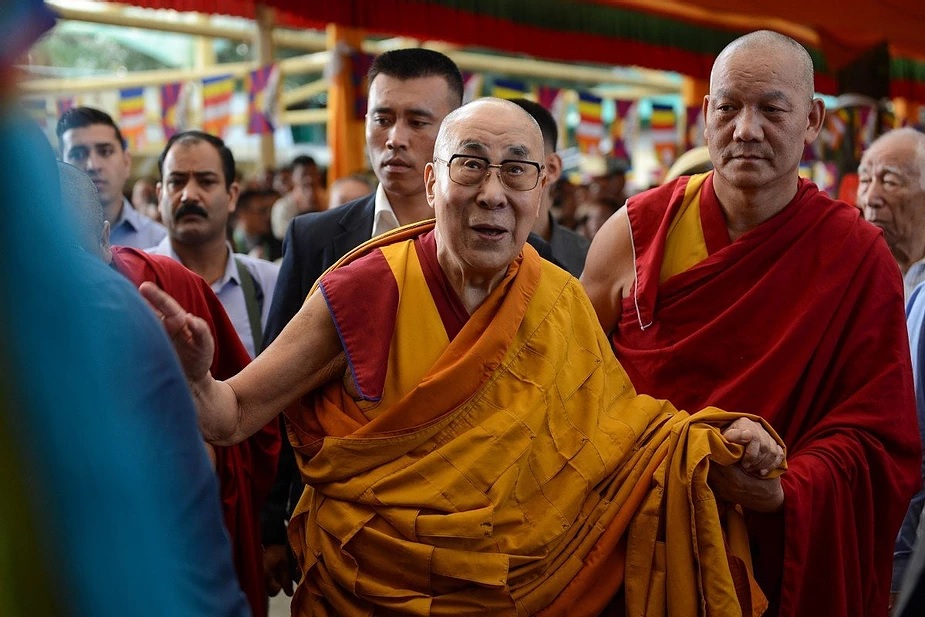
Le Dalaï-Lama, grand ambassadeur de l'humanisme dans le monde entier est une figure emblématique pour bon nombre d'entre nous. Ses philosophies sont évocatrices de paix de partage et d'échange.
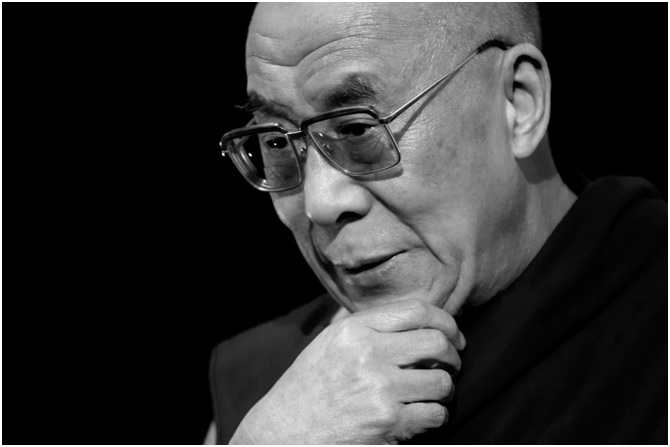 Photo © Jamie Williams
1. Prenez en compte que le grand amour et les grandes réussites impliquent de grands risques.
Le risque est impliqué dans chaque grande occasion de la vie. S’il n’y avait pas de risques, alors tout le monde agirait, ce qui rendrait les gens « ordinaires » et non « grands ». Démarquez-vous des autres comme celui qui peut non seulement prendre des risques, mais qui apprécie de le faire.
2. Lorsque vous échouez, n’échouez pas la leçon.
Si vous oubliez ce que vous avez appris à ne pas faire, vous serez condamnés à répéter vos actions. Plus important encore, ne craignez pas l’échec. Car l’échec est le précurseur de la réussite. Rien de grand ne s’est accompli sans échec. Le but de la vie n’est pas que nous soyons parfaits, mais que nous devenions la meilleure version possible de nous-même. Il est plus important d’être authentique qu’infaillible, et nous gagnons à écouter notre instinct. Les seules vraies erreurs sont celles que nous commettons à répétition. Les autres sont des occasions d’apprentissage.
3. Suivez les trois R :
Respect de soi – La confiance est la clé de la réussite et si une personne ne se respecte pas, vous ne pouvez pas croire en elle. Ainsi, si vous ne vous respectez pas, vous ne pouvez pas réaliser de grandes choses puisque vous ne pouvez respecter les autres.
Respect des autres – Et vous serez respectés en retour. Si vous ne retournez pas le respect des autres, certains présumeront qu’ils ne valent pas la peine d’être respectés, et de ce fait, ils ne se respecteront pas.
Responsabilité pour toutes vos actions – Vous êtes seul responsable de vos sentiments, de vos actions, de votre réussite, etc. Vous contrôlez totalement votre vie, il ne faut pas essayer de blâmer les autres pour ses erreurs et ses malheurs.
4. Rappelez-vous que ne pas obtenir ce que vous voulez est parfois un merveilleux coup de chance.
Essayer d’obtenir tout ce que vous désirez ne sera pas nécessairement bon pour vous dans le long terme. Si quelque chose semble ne jamais fonctionner, comme si le destin intervenait, pensez à lâcher prise et revenez y plus tard. L’Univers agit de façon mystérieuse et doit être digne de confiance.
5. Apprenez les règles pour savoir comment les transgresser correctement.
Les règles sont faites pour être transgressées. La plupart d’entre elles sont mis en place par les anciens établissements corrompus qui ne cherchent qu’à asservir et maintenir leur propre pouvoir. Quand il s’agit de transgresser les règles, faites-le correctement pour éviter les répressions. Mais par-dessus toutes choses, assurez-vous que vous le faites dans les règles. Si l’autorité n’avait jamais été remise en question, nous serions une civilisation stagnante.
6. Ne laissez pas une petite dispute briser une grande amitié.
Évidemment, l’amitié est bien plus importante qu’une petite dispute, mais très peu de gens mettent cette règle en pratique. Vous devez également être en mesure de suivre la règle #7 pour pouvoir suivre la règle #6.
7. Lorsque vous réalisez que vous avez commis une erreur, prenez immédiatement des mesures pour la corriger.
Et ne laissez pas votre fierté faire obstacle à ces mesures. Pardonnez-vous et prenez-en l’entière responsabilité. Cela en dira long sur votre personne. Ce n’est pas le nombre de nos échecs qui déterminent notre réussite finale, mais notre capacité à en extraire de la sagesse, puis à passer à autre chose avec une énergie nouvelle. Les erreurs sont neutres; nous pouvons en faire ce que nous voulons. Selon notre manière de les percevoir, elles nous accableront ou nous guideront vers le succès.
8. Passez un peu de temps seul chaque jour.
Peu importe ce que vous faites, passez au moins 30 minutes de votre journée seul dans un endroit calme. Cela vous donnera au moins une demi-heure pour observer ce qui se passe dans votre vie, de prendre conscience de qui vous êtes et de comprendre ce que vous voulez. Que ce soit à travers la prière, la méditation, le yoga ou le golf, ce rituel est un « must ».
9. Ouvrez vos bras au changement, mais ne laissez pas s’envoler vos valeurs.
Le monde est en constante évolution. Si vous n’êtes pas ouvert au changement, alors vous serez malheureux. Vous allez vous-même changer, mais cela ne veut pas dire que vos valeurs doivent changer aussi. Accueillez les nouveaux lieux, les nouveaux visages et les nouveaux amours, mais ne changez jamais ces parties importantes de vous-même, sauf si vous avez de bonnes raisons de penser que vous aviez tort d’y croire.
10. Rappelez-vous que le silence est parfois la meilleure réponse.
Le silence conduit à la contemplation détendue au cours de laquelle les émotions ont moins d’influence et où logique peut prendre le relais. Par exemple, si vous vous disputez avec un ami, garder le silence au lieu de riposter en vous emportant est plus efficace et mettra fin à la dispute beaucoup plus rapidement.
11. Vivez votre vie avec honneur.
De ce fait, lorsque vous vieillirez et vous regarderez en arrière, vous serez en mesure d’en profiter une seconde fois. Vous allez devoir vivre avec vos actions pour le reste de votre vie, alors pour vous épargner le regret et l’angoisse, vivez votre vie avec honneur à partir de maintenant. Les bonnes choses viennent et les bonnes personnes aussi. Vous ne serez jamais puni pour avoir agi avec intégrité.
12. Une atmosphère d’amour dans votre maison est le fondement de votre vie.
C’est la règle où vous avez le moins de contrôle. Comme dans la règle # 3, si vous respectez (aimez) votre famille, ils vous respecteront et vous aimerons en retour. Faites entrer l’amour dans votre maison. Faites briller les murs avec de la tendresse. Cela établira une base solide dans la vie de vos enfants.
13. Lorsque vous êtes en désaccord avec les êtres chers, concentrez-vous uniquement sur le présent.
Ne réveillez pas le passé. Le passé est constant, immuable. Réveiller le passé ne peut qu’apporter plus de douleur à la situation. Pardonnez les actions passées et concentrez-vous sur le présent.
14. Partagez vos connaissances.
On apprend tellement dans une vie. Partager vos connaissances avec les gens que vous rencontrez, cela ne peut que les aider. Plus important encore, partager vos échecs et vos expériences pour que les autres ne reproduisent pas les mêmes erreurs.
15. Soyez doux avec la terre.
La terre est l’endroit où nous vivons. Donc, cela devrait être évident. Blesser la terre c’est se blesser soi-même, l’avenir de vos enfants et de vos proches.
16. Une fois par an, aussi souvent que possible, allez quelque part où vous n’êtes jamais allé auparavant.
Découvrez de nouveaux lieux et de nouvelles choses. Vous pourriez vous retrouver avec quelqu’un quelque part qui vous rend plus heureux. La Terre est si vaste avec des endroits uniques et magnifiques, pourquoi ne pas aller explorer un peu ?
17. Rappelez-vous que la meilleure des relations est celle dans laquelle votre amour pour l’autre dépasse vos propres besoins.
L’inverse peut être un indice que votre relation doit se terminer. Si vous avez besoin de quelqu’un plus que vous l’aimez, c’est un signe de dépendance, pas d’affection. Trouvez quelqu’un où l’amour est la force dominante et dans laquelle la relation est beaucoup plus épanouissante.
18. Jugez vos réussites d’après ce que vous avez eu à renoncer pour y arriver.
Décidez ce que vous voulez. Concevez votre vie idéale et foncez. Ne laissez aucune partie de ce rêve s’échapper, ainsi, vous ne vivrez jamais dans le regret. Tout est bon, car tout est utile – dans la mesure où vous savez saisir les occasions d’apprentissage qui se présentent à vous. Si vous percevez les expériences difficiles comme de mauvais présages, elles auront un impact négatif. Si vous les voyez comme des occasions de croître, vous saurez les transcender.